Job search · 6 min read · 3 October 2026
MOHRE warns jobseekers: verify a job offer before you start recruitment steps
An offer letter with a logo and a salary isn't proof of anything. MOHRE wants jobseekers checking the serial number before they check their notice period.
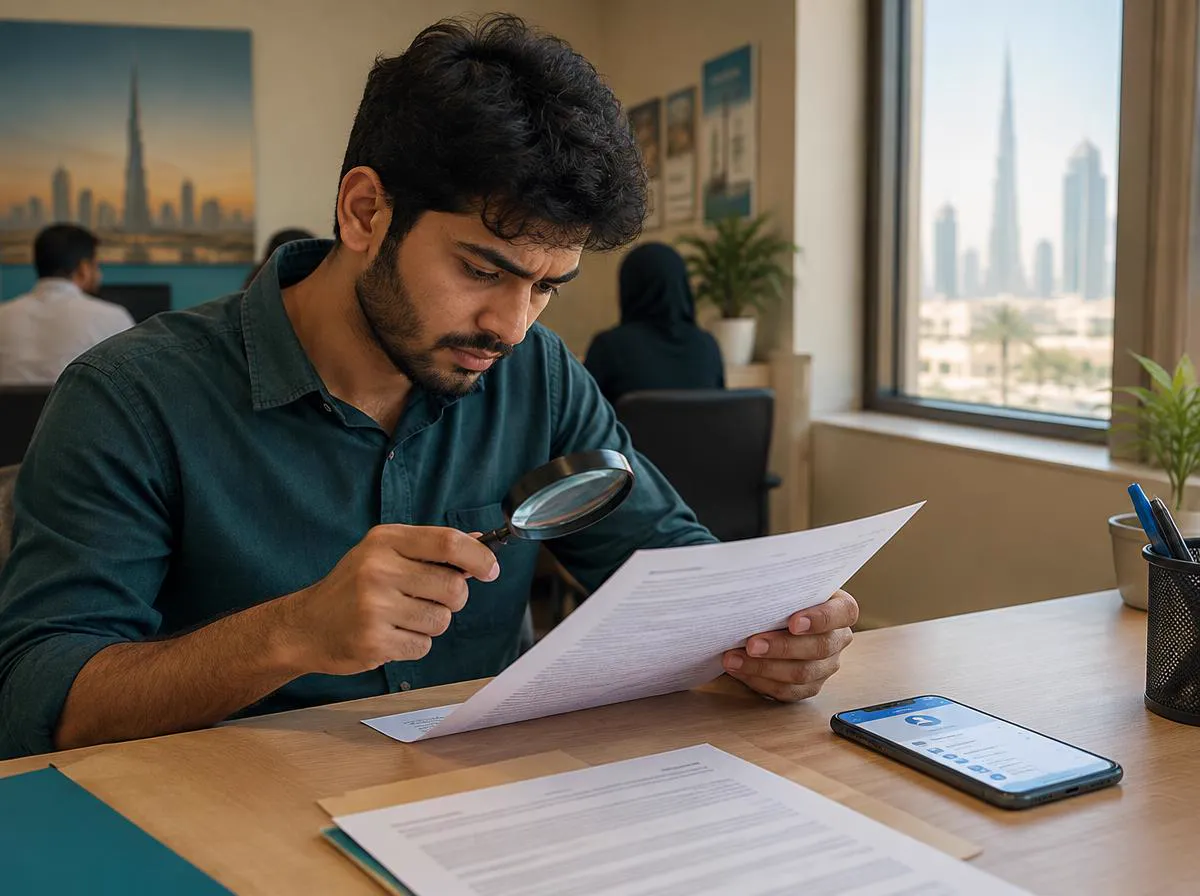
The UAE Ministry of Human Resources and Emiratisation (MOHRE) issued a fresh warning this week, reported by Gulf News on 2 October 2026, telling jobseekers both inside and outside the country not to begin any recruitment procedures — paying fees, sharing documents, arranging travel — before confirming that a job offer is genuine. It's not the ministry's first warning on this, but it's a useful prompt to actually run the check rather than assume an offer that looks official is one.
What MOHRE actually said
According to the ministry, a legitimate UAE job offer is issued on an approved form that carries a serial number and a barcode, both of which exist specifically so the offer can be checked independently rather than taken on trust. MOHRE's advice is simple: don't act on an offer — don't pay anything, don't send your passport or Emirates ID, don't resign from your current job — until you've verified it through an official channel.
How to verify an offer
- MOHRE's website, where offer details can be checked directly.
- The ministry's smart application.
- The MOHRE contact centre, on 600590000.
All three routes let you confirm that the offer's serial number and barcode correspond to a real, registered job offer rather than a document someone put together in a word processor.
Why this keeps coming up

This isn't a one-off alert. MOHRE and Gulf News have flagged the same pattern repeatedly over the past year: fake postings on social media and messaging apps, often copying a real company's logo and branding, offering salaries well above market rate and promising unusually fast recruitment. The financial version of the scam asks for upfront payment for visa processing, medical tests or registration — costs that UAE labour law does not allow an employer to pass on to a worker in the first place. The data version asks for passport scans, Emirates ID details, banking information or one-time verification codes, which has nothing to do with hiring and everything to do with identity theft.
None of that is new in this week's announcement specifically, but it's the context for why MOHRE keeps repeating the same advice: the scam format is stable enough that the same checklist keeps working.
What to actually check before you go further
- Does the offer letter have a serial number and barcode, and does it check out on MOHRE's site, app or contact centre?
- Is any payment — for a visa, a medical, registration, "processing" — being asked of you? Under UAE labour law, employers cover these costs, not the worker.
- Is the interview happening only over WhatsApp or a similar app, with no official company email or careers page involved?
- Is the salary noticeably above what similar roles pay, with an unusually fast offer?
- Can you reach the company through its own official website or verified contact details, separate from whoever contacted you?
This is general information, not legal advice. If you think you've been targeted by a recruitment scam, MOHRE's contact centre (600590000) and the ministry's official channels are the right place to report it, not a forum thread or a second recruiter who reached out the same week.
Why this matters for employers too
Brand impersonation is the quieter cost here. Scammers copying a real company's name and logo damage that company's reputation with every candidate who gets burned, often before anyone at the company knows it's happening. If your roles are posted and verifiable in one place, with a consistent process candidates can point back to, it's harder for someone to run a convincing fake in your name — and easier for a suspicious candidate to check with you directly.
On Scouting, every job posting sits inside a structured listing tied to a real company account, and conversations with matched candidates happen in-platform rather than over an unofficial WhatsApp thread — which is a small thing, but it's exactly the kind of small thing that makes an offer easy to verify instead of easy to fake.